
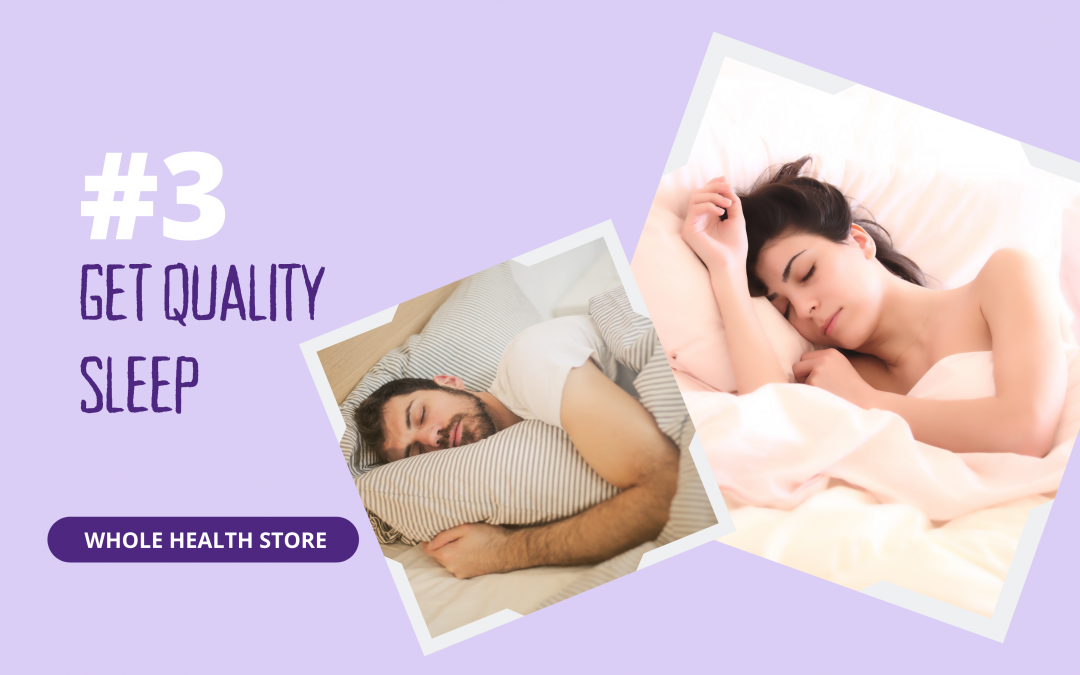
Tenet #3 – GET QUALITY SLEEP
How’s your sleep?
- Do you have trouble falling asleep?
- Do you wake up during the night?
- Do you feel refreshed when you get up?
- How many hours sleep do you get?
- Do you dream?
- Do you get hot or cold?
The quality of your sleep matters!
Poor sleep can contribute to and is linked with all sorts of health concerns such as (1):
- Anxiety
- Depression
- Diabetes
- Heart attacks
- High blood pressure
- Lowered immune function
- Lowered sex drive
- Obesity
- Poor brain function
- Poor memory
- Stroke
10 TIPS FOR BETTER SLEEP
#1 Reduce LED Exposure
Regular exposure to LED after sunset contributes to poor sleep.
LED lights, including that from your electronic devices, suppresses melatonin production which disturbs our sleep cycle. The excess blue light from screens prevents us from falling asleep…it literally keeps us wired for wakefulness. The more exposed we are to blue light the more likely we are to induce sleep pattern disturbances.
Melatonin is our natural sleep-inducing hormone…suppress its production and we will increase our chances of having trouble getting to sleep and or staying asleep.
TV screens also emit blue light.
- Reduce use of LED lights where we don’t need them.
- Power down screens as the sun goes down.
- Get regular daylight – natural light – exposure.
- Turn off or dim lights in the evening.
- Sleep in darkness.
#2 Get Up With The Sun And Wind Down As It Goes Down
At least try to go to sleep and wake up at consistent times.
Our natural circadian rhythms are designed to align with the rising and setting of the sun. Regular wake and sleep times can improve long-term sleep quality. Irregular sleep patterns can lead to poor sleep quality, alter our circadian rhythms, and interfere with the production of our sleep hormone, melatonin.
Shift workers…do the best you can to maintain some sort of semi-regular pattern.
Research suggests that we are best to get up with the sun to prevent sluggishness, and to improve performance, focus and attention (2).
Wake up a little earlier each day till you can get up with the sun. You’ll feel lighter and fresher!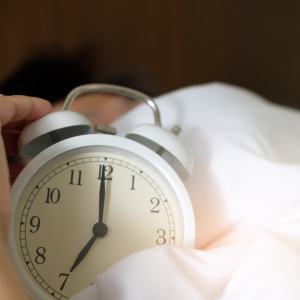
#3 Caffeinate Earlier
Caffeine can enhance your energy, focus and performance. It can stay in your blood for 6-8 hours. It stimulates your nervous system and thus can keep you awake when needed…but…can mean you can’t relax and go to sleep when you want to.
It is a stimulant and can create alertness. It is an adenosine receptor antagonist. What’s that? Adenosine is a substance in your body that helps you feel sleepy. Caffeine blocks this and keeps you awake.
Caffeine can muck up your circadian rhythm. It delays the kicking in of your sleep cycle.
On average a cup of coffee contains 95 – 280mg of caffeine depending on your choice of brew. It is also found in black and green tea. It is often added into energy drinks. Plus, it is found in chocolate.
Research suggests that we would do best to keep our caffeine intake to less than 400mg per day (3).
Can’t do without your cuppa?
If you experience these symptoms, it could mean you need to ease up on your coffee habit:
- you are grumpy till you get your daily coffee
- you get a headache if you don’t get your fix
- you find yourself needing more and more to get the same effect
- you are drinking it for effect rather than simple pleasure
- you can’t focus without it
- you get the gitters or feel anxious after you drink a cup…or 4
- you cannot live without it
- you have trouble getting to sleep
1-2 cups a day is enough and for some people is still too much!
Drink it MINUS the sugar!
Consume it at least 6 hours before you intend to go to sleep.
So, enjoy your coffee in the morning, or as a specific boost when needed…and 6 hours before bed.
#4 Bedroom Hacks
Our bedroom itself impacts on our sleep.
We want our room to be not too hot, not too cold…just right. Apparently…most people sleep best at about 20 degrees Celsius.
Keep it quiet. As much as possible try to reduce the noise that comes into your room. Traffic and other external noise can contribute to poor sleep for some people. Sound from electronic devices, whether it be a low hum or TV blasting in another room, can disrupt your ability to fall asleep.
Keep it dark. Light from outside streetlights and passing cars, as well as light emitting from electronic devices can prevent sleep onset.
Get comfy. Hopefully you can invest in a bed, mattress and pillows that suit you. Some people like a soft mattress and others like a firm one…so find one that feels best to you. Some companies offer a trial period so you can sleep test over an extended period of time.
Natural fibre bed sheets. 100% cotton or bamboo or hemp. Warm it up with organic wool. Keep synthetic materials at bay and opt for natural materials instead. These keep you cooler in summer and warmer in winter.
Ditch the fragrant detergents. Wash your sheets and sleepwear in fragrance free, as natural as possible options. You could add pure essential oils to your sheet washing – lavender, chamomile or cedarwood.
Keep it clean. Vacuum and dust regularly. Wash bedsheets at regular intervals too.
Keep TVs and screens for living areas. Charge devices well away from your bed, or in another room.
Try turning your bed another direction. Geopathic Stress from ley-lines can be an overlooked contributing factor to poor sleep. It may be worth looking into and ruling out.
Create a bedroom that you want to sleep in. Make it inviting.
#5 Eat Earlier And/Or Lighter
Eating late at night can really interrupt your sleep. Going to bed soon after eating or on a full stomach…is not only linked with symptoms of reflux but also keeps us awake by preventing the natural production of melatonin and human growth hormone.
Eat earlier in the evening.
If eating later, at least keep portion sizes smaller, and wait at least 1 hour before going to bed.
Some people find eating carbs in the evening helps them sleep however, research suggests some people improve their sleep with a low carb diet.
Think about your lifestyle…what, how and when you eat.
Take the time to notice what really serves you. What makes you feel worse and keeps you awake; and what makes you feel great and sleep well?
#6 Exercise Right
We need to move…daily. Not too much. Not too little. Just enough.
Moving…exercise…literally gets the blood moving, heart pumping. It warms us up and increases our metabolism. It stimulates hormones. The more vigorous the movement the more our heart rate tends to go up. The fitter we are the quicker it tends to come back to a resting (lower) rate.
Exercise can literally rev us up.
Which is great if we exercise in the morning as we are energised for the day. In the evening it can be no bother to sleep for some but can keep others in a heightened state of energy and so disrupt sleep.
It’s not a hard and fast rule that exercising in the evening will keep you awake…but if you find it does, then make some changes.
If this happens to you and you can’t swap your exercise routine to the a.m. then make sure you add a relaxation component to your evening physical movement program. Finish up with 15 minutes of slow flowing yoga with an emphasis on long exhales. Or try Yoga Nidra (4).
Assess whether your exercise choice is right for you. Are you pushing too hard? Is it causing aches and pains? Do you need to back off a little or add in more stretching and conscious breathing?
Mindful movement that suits your needs is what we are after. What we really need is sustainable movement practices for life!
Overall, exercise helps you sleep better (5). It reduces or clears adrenaline and decreases excessive cortisol. Aerobic exercise stimulates endorphins which at first can drive alertness, but reflexively gives you a feeling of relaxation and pleasant calmness.
Finding the exercise that is right for you and doing it at the right time for you is key.
Listen to your body!
#7 Identify Underlying Issues
In the quest for sleep…you must consider what might be driving or contributing to your insomnia.
There are some health conditions that might contribute to sleeplessness. Treat these or alter your current treatment and you may just get some relief.
- Blocked Nose?
Hayfever, allergies, nasal polyps can all cause ‘sleep-disordered breathing’ and sleep apnoea. Snoring can be an indicator of narrowed upper airways during sleep which might result from the inflammation and congestion brought on by allergies and immune conditions.
- Got reflux?
You may not even realise that you do. Sometimes it is silent. Reflux might give you that acid taste rising up in your throat to your mouth, or you might experience chest pain so bad it wakes you up. Addressing reflux can resolve your sleep issues. A qualified Naturopath can help treat reflux/GORD.
- Joint Issues?
Arthritis can cause aches and pains that disrupt sleep. Finding a way to control the inflammation that drives your pain might just end your troubles with insomnia. A change in diet, some quality supplements, using herbal teas and fresh herbs can all help you put out the fire of inflammation.
- Thyroid madness?
An overactive thyroid can keep you awake. Other endocrine disorders might also be adding to poor sleep. Sorting out these conditions can help you sleep better.
- Neurological Conditions?
Several disorders and diseases of the nervous system can interfere with sleep. Investigating the cause of your sleeplessness is fundamental to implementing the right strategies for you.
- Mental Health?
The inability to ‘switch off’ your busy mind might be a bad habit or part of a more complex mental health issue. Yoga, meditation, counselling, energy work, psychology may all provide you with useful tools to rewire your brain to be able to quieten down.
- Medication – check your medications, as some can interfere with sleep
#8 Limit Daytime Naps
Long daytime naps can interfere with night-time sleep (6). If you choose to nap, limit yourself to up to 10-20 minutes and avoid doing so late in the day.
If you work nights, however, you might need to nap late in the day before work to help make up your sleep debt.
#9 Natural Solutions For Better Sleep
- Magnesium (7)
- Herbs – Valarian, Oats, Passionflower, Lavender, Lemon Balm, Kava, Hops, St John’s Wort, and Chamomile – speak to a qualified Herbalist to discover which herb might suit you best
- Drink warm milk with local honey
- Melatonin (8)
- Snack on activated almonds – they are a source of the sleep-regulating hormone melatonin
- Essential Oils – Lavender, Lemon Balm, Marjoram, Chamomile, Sandalwood
- Eat foods that contain serotonin-producing tryptophan like turkey, nuts, and seeds
- L-theanine – up to 400 mg of this amino acid may help improve sleep and relaxation
- Infrared Saunas (9)
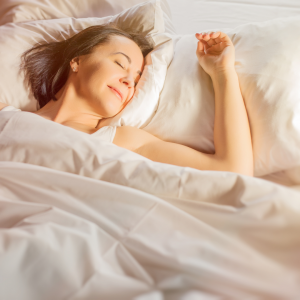
#10 Yoga Nidra
Can yoga help you sleep better?
Yes, it can. Yoga Nidra is a specific yoga practice. It has been shown to promote rest and relaxation.
Yoga Nidra is referred to as ‘yogic sleep’. It is a form of guided relaxation that induces that state somewhere between waking and sleeping – deep relaxation with full consciousness.
It can reduce the symptoms of stress and anxiety, ease chronic pain, dizziness, and other sleep disrupting symptoms.
There are several good apps that you can download for free. Try like #yoganidralite
Regular practice is what will make a difference.
Try 10 minutes each evening or at least 3 times a week. Consistent practice is the key!
As a beginner you’ll probably fall asleep but don’t worry that’s normal.
Practicing Yoga Nidra and inducing the #relaxationresponse balances the sympathetic and parasympathetic nervous systems. Your brain shifts from high activity (beta) to a more relaxed state (alpha). The process can then bring you to a deep-alpha state or a high-theta brain-wave state. Your brainwaves slow down from over 13Hz to less than 8Hz. As your brainwaves slow down it produces certain hormones and neuropeptides that not only aid sleep but have been linked to better memory, creativity, and ability to learn.
To learn more about this read this: http://www.johnhempstead.com/…/books/BrainWaveBook_1.pdf
A certified Yoga Therapist can teach you Yoga Nidra and help you with practices to improve your sleep.
A Naturopath will have the skills to offer assistance with your sleep problems and help you experience #bettersleep They can help you discover why you are not sleeping well and teach you strategies and prescribe naturopathic remedies to help you get a good night’s sleep.
References:
- https://startsleeping.org/statistics/
- https://pubmed.ncbi.nlm.nih.gov/23781653/
- https://www.ncbi.nlm.nih.gov/pmc/articles/PMC5445139/
- https://sleep.biomedcentral.com/articles/10.1186/s41606-017-0009-4
- https://www.ncbi.nlm.nih.gov/pmc/articles/PMC5385214/
- https://www.sleepfoundation.org/how-sleep-works/does-napping-impact-sleep-at-night
- https://pubmed.ncbi.nlm.nih.gov/23853635/
- https://pubmed.ncbi.nlm.nih.gov/28460563/
- https://sleepsciencenews.com/infrared-saunas-and-sleep/